Introduction
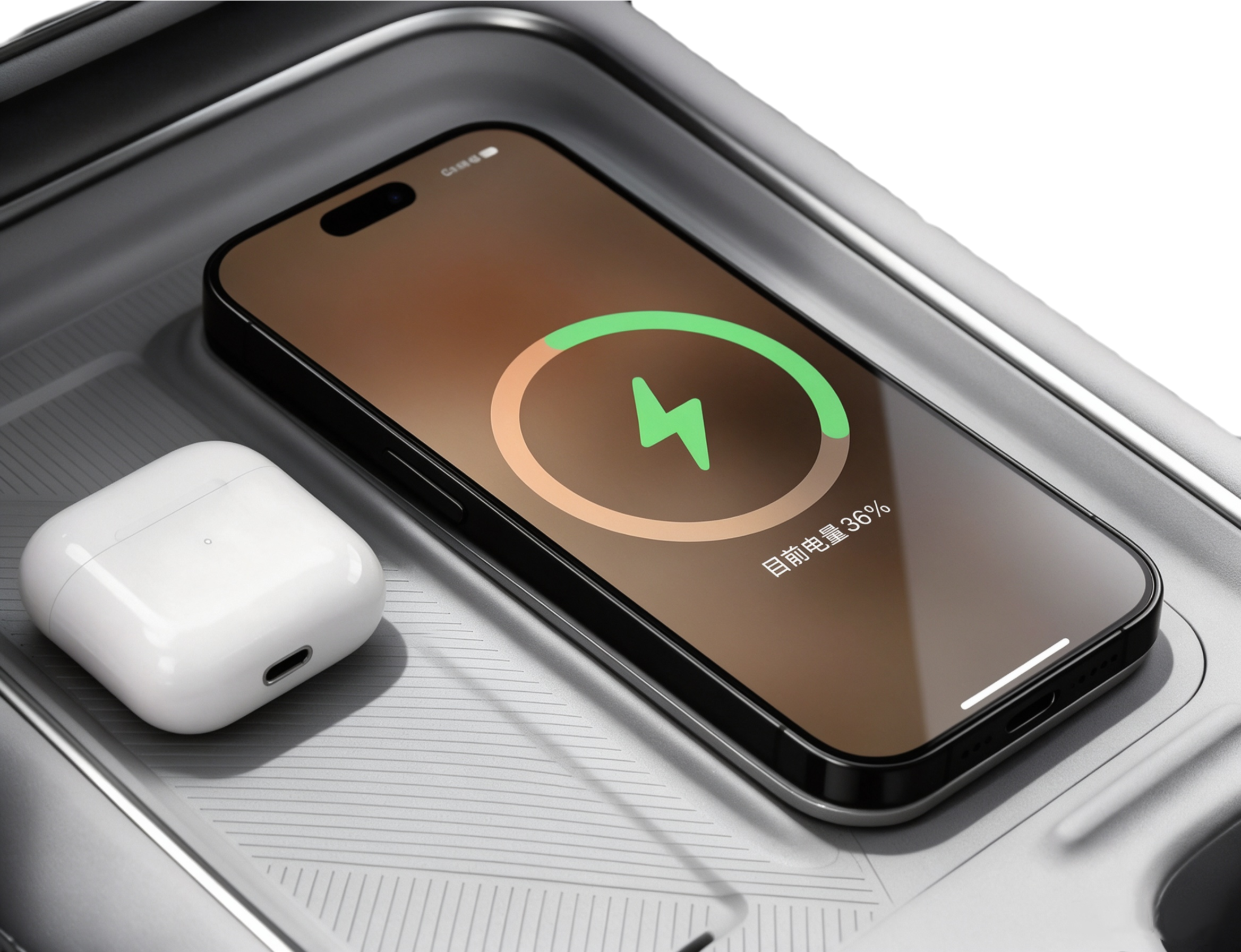
In September, Apple released two versions of AirPods 5 in the Chinese market:
-
CNY 999: the USB-C version with a wired charging case
-
CNY 1,149: the version with a wireless charging case
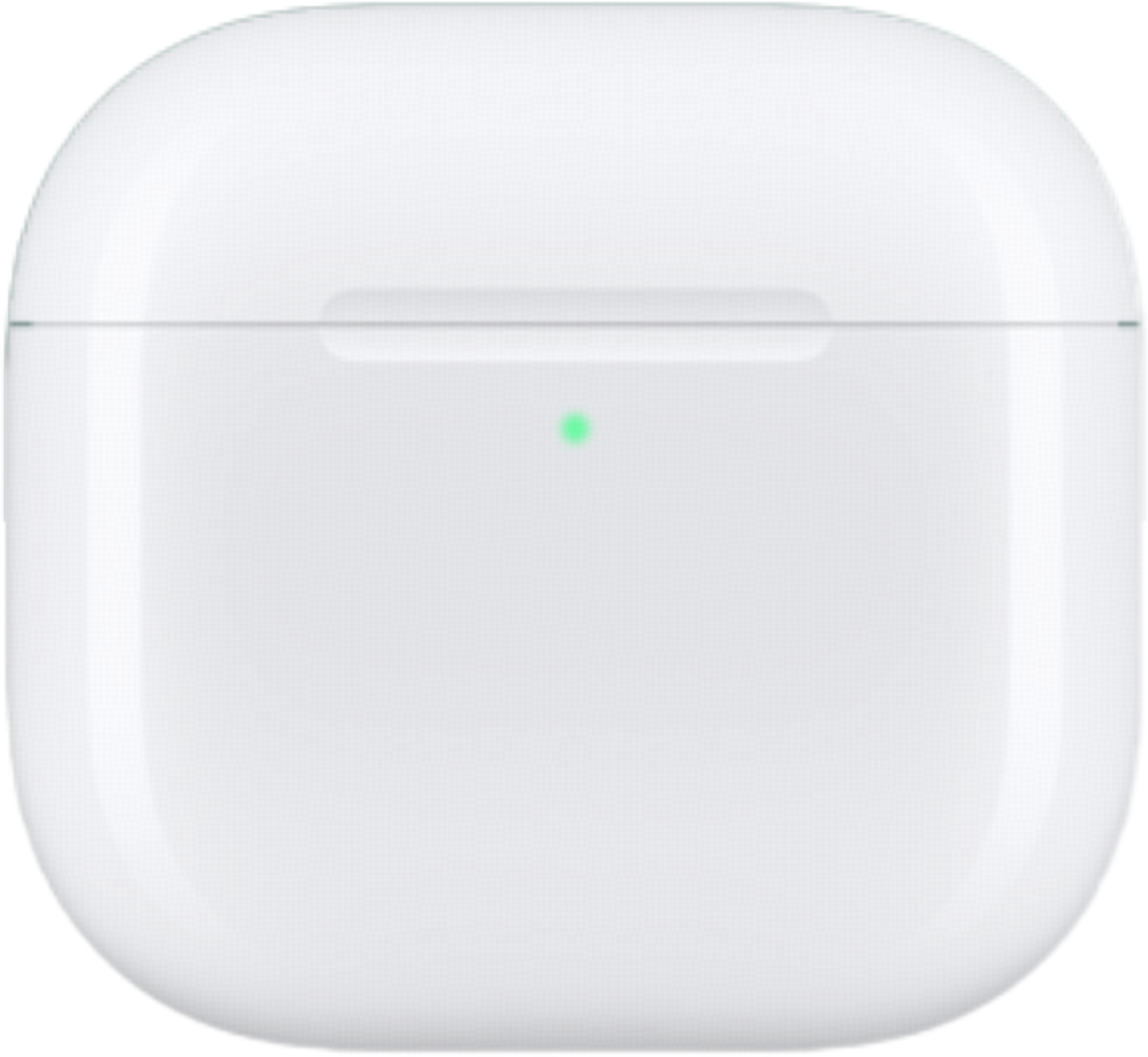
The price gap is CNY 150, yet the earbuds themselves are identical, and both versions support active noise cancellation.
It is not hard to see that the way consumer electronics are tiered has changed. Active noise cancellation, once a feature that justified a higher price, is now standard across the whole lineup — "does it have ANC" no longer separates one tier of earbuds from another. The dividing line has become "does it have wireless charging".
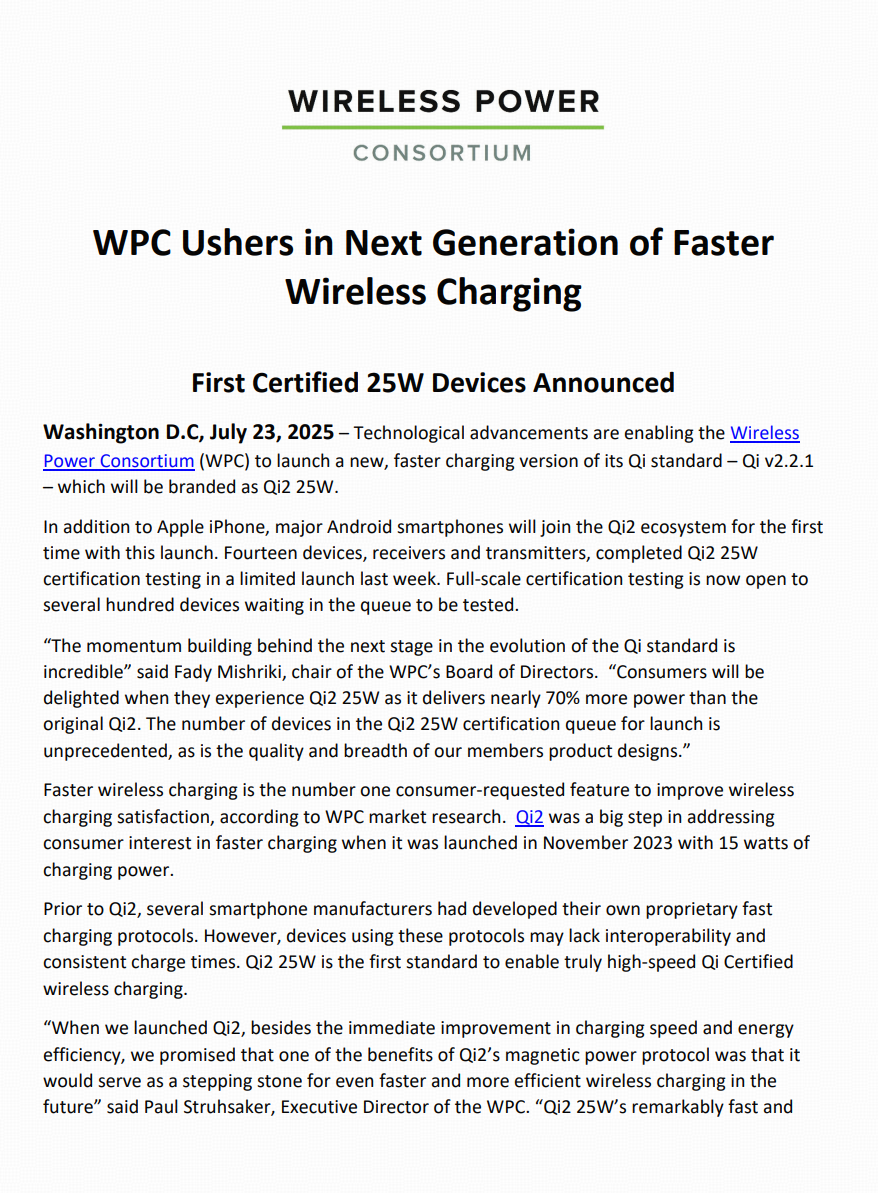
The WPC pointed out as early as the launch of Qi2 25W that wireless charging is expanding on both the device side and the accessory side. Within a year of its introduction, there were over 1.5 billion certified Qi2 devices, transmitters and receivers, in the market globally.
But when you design a wireless charging transmitter, the real engineering barrier is rarely the chip itself. It is how you balance three sets of system-level constraints:
Power vs. thickness, magnet force vs. thickness, customization vs. lead time
All three tensions hold at the same time in NuVolta's standard module family.
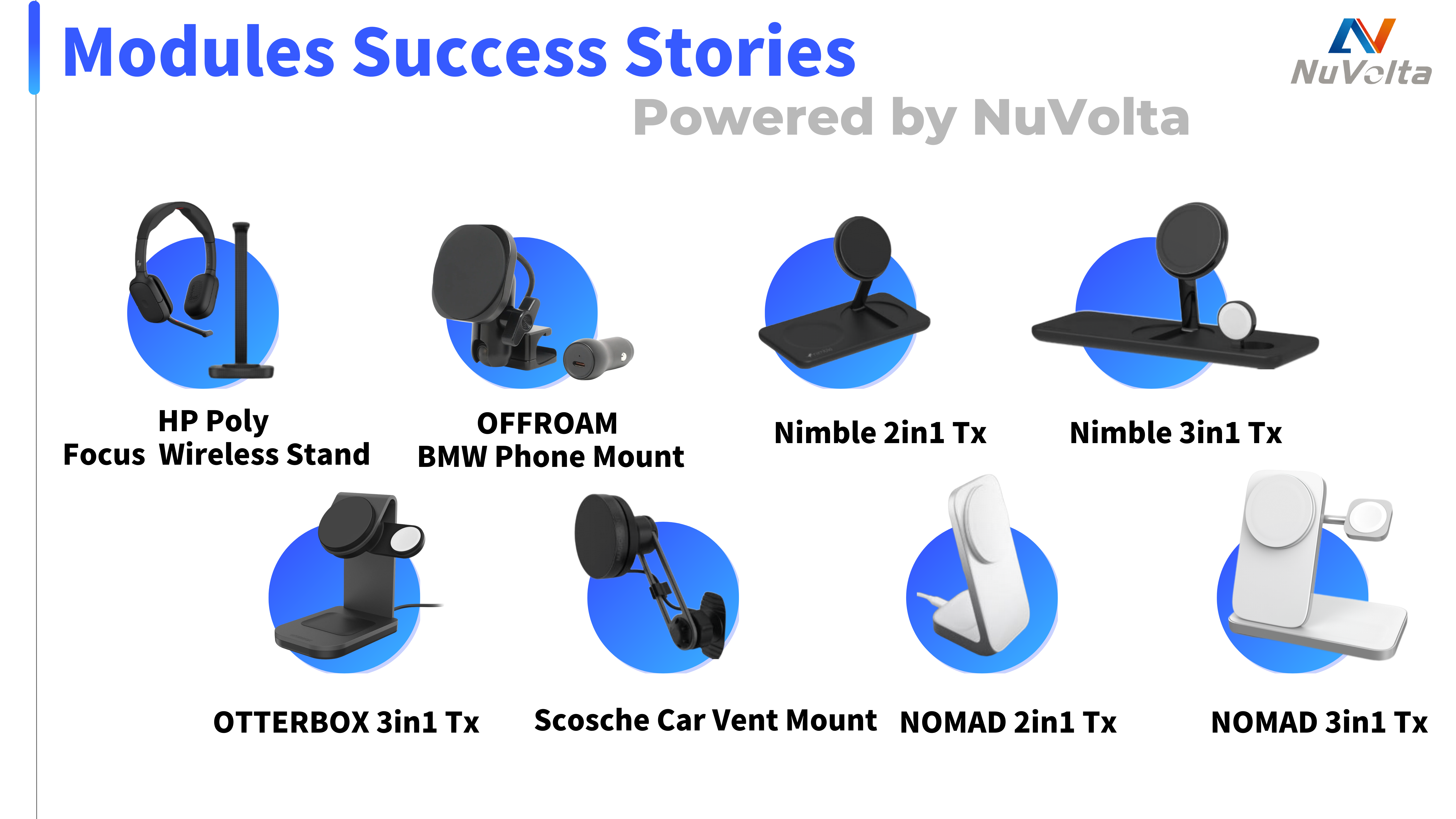
NuVolta's JDM track record
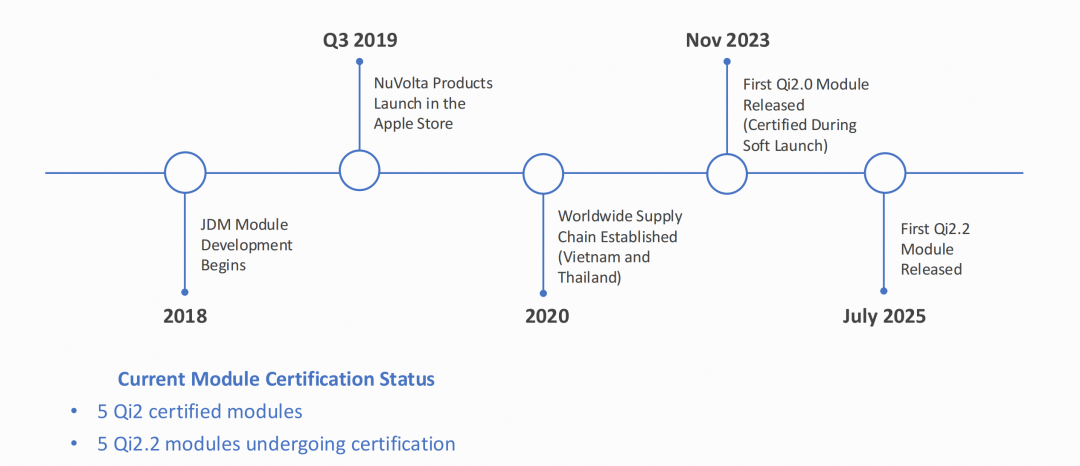
2018: NuVolta formally launched JDM (joint design and manufacturing) development
2019: NuVolta products entered Apple's supply chain
2020: NuVolta established a global supply chain covering Vietnam and Thailand
2023: NuVolta released its first Qi2.0 module, already certified at the soft-start stage
2025: NuVolta released the world's first Qi2.2 standard module
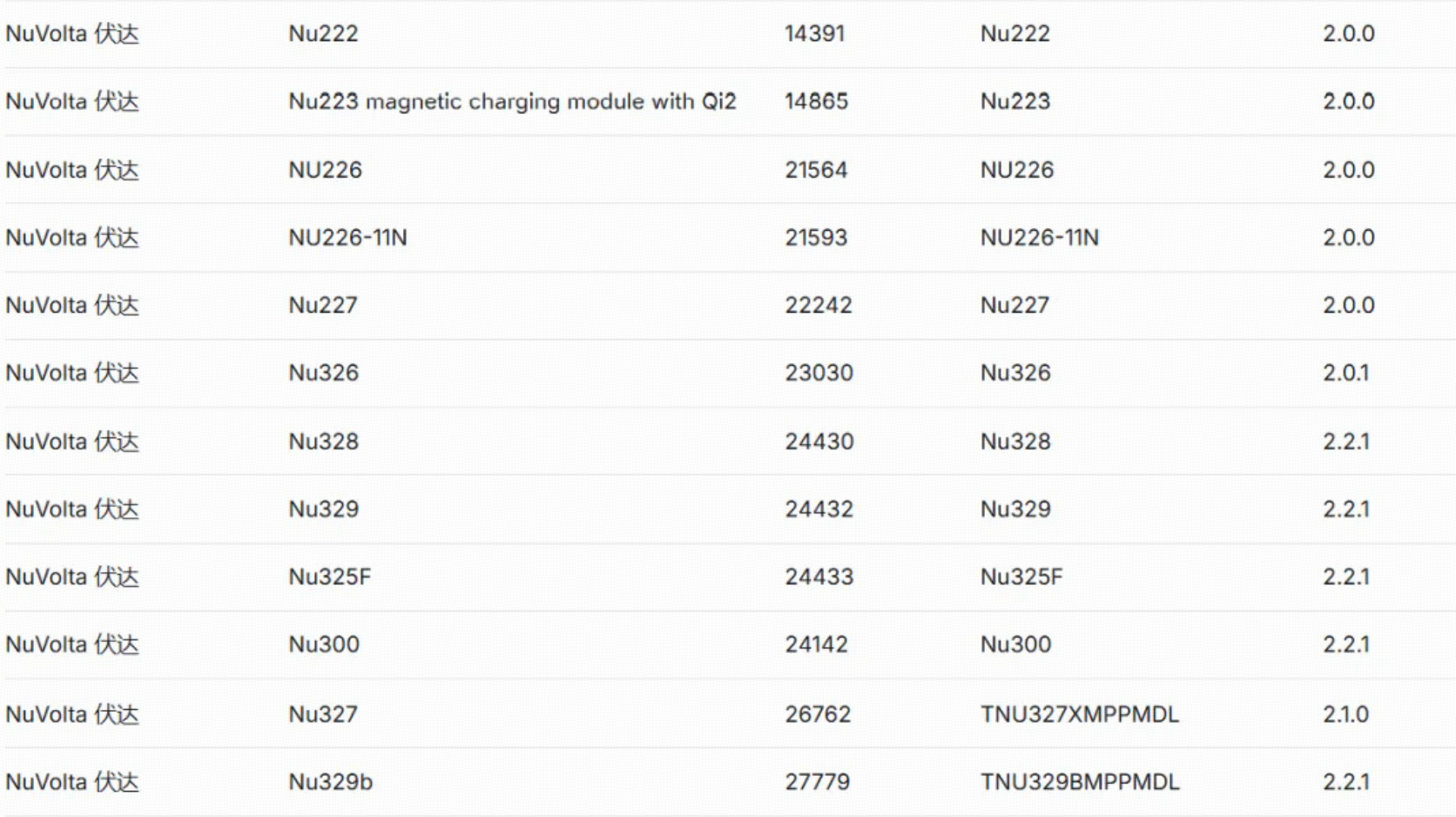
To date, NuVolta has 12 Qi2-certified modules, with several more currently in certification.
How the module family answers the three trade-offs
Power vs. thickness
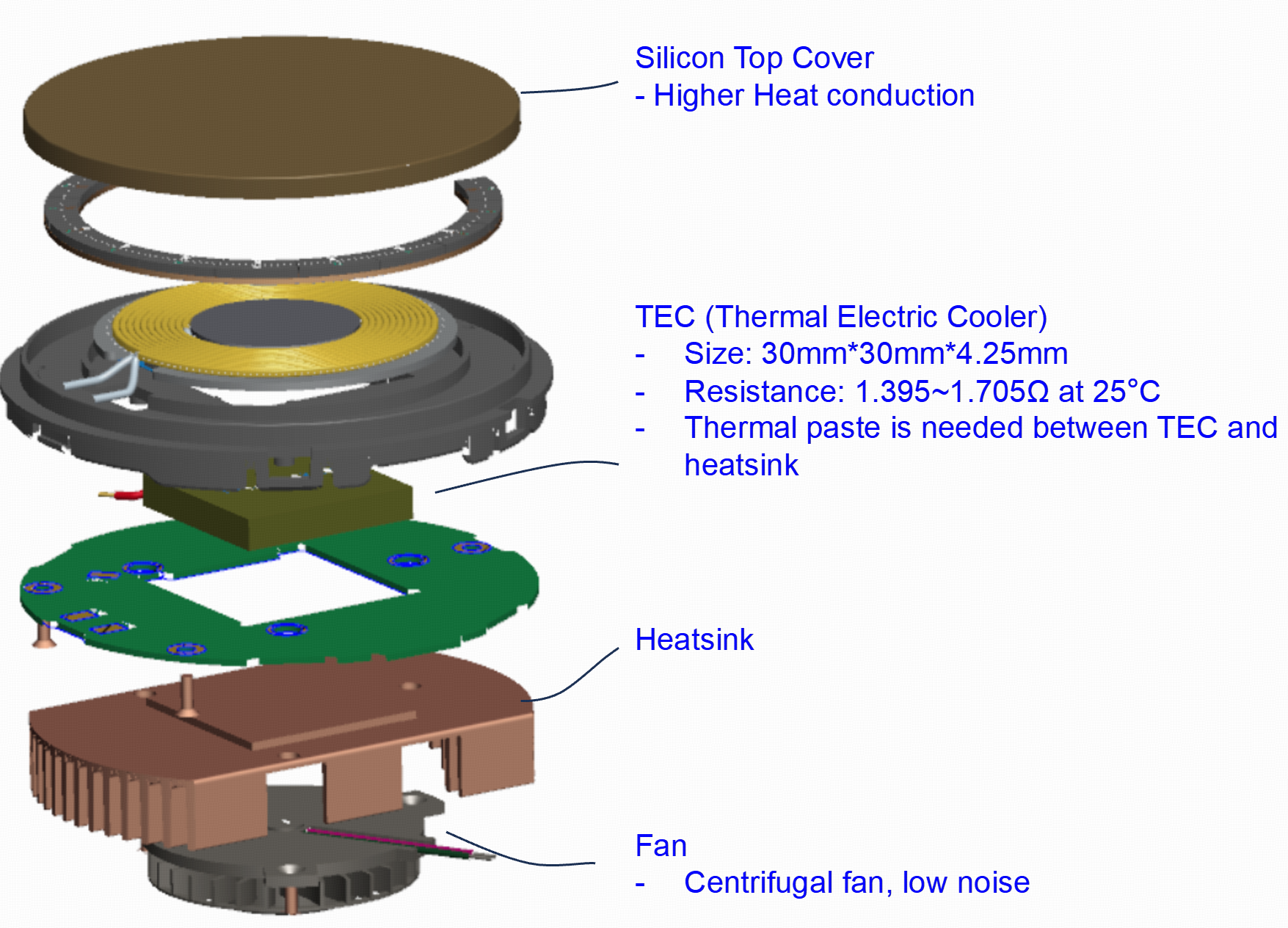
NuVolta has developed three distinct thermal and structural approaches: passive cooling in an aluminum housing, active cooling with a fan, and thermoelectric (TEC) cooling combined with a fan.
Magnet force vs. thickness
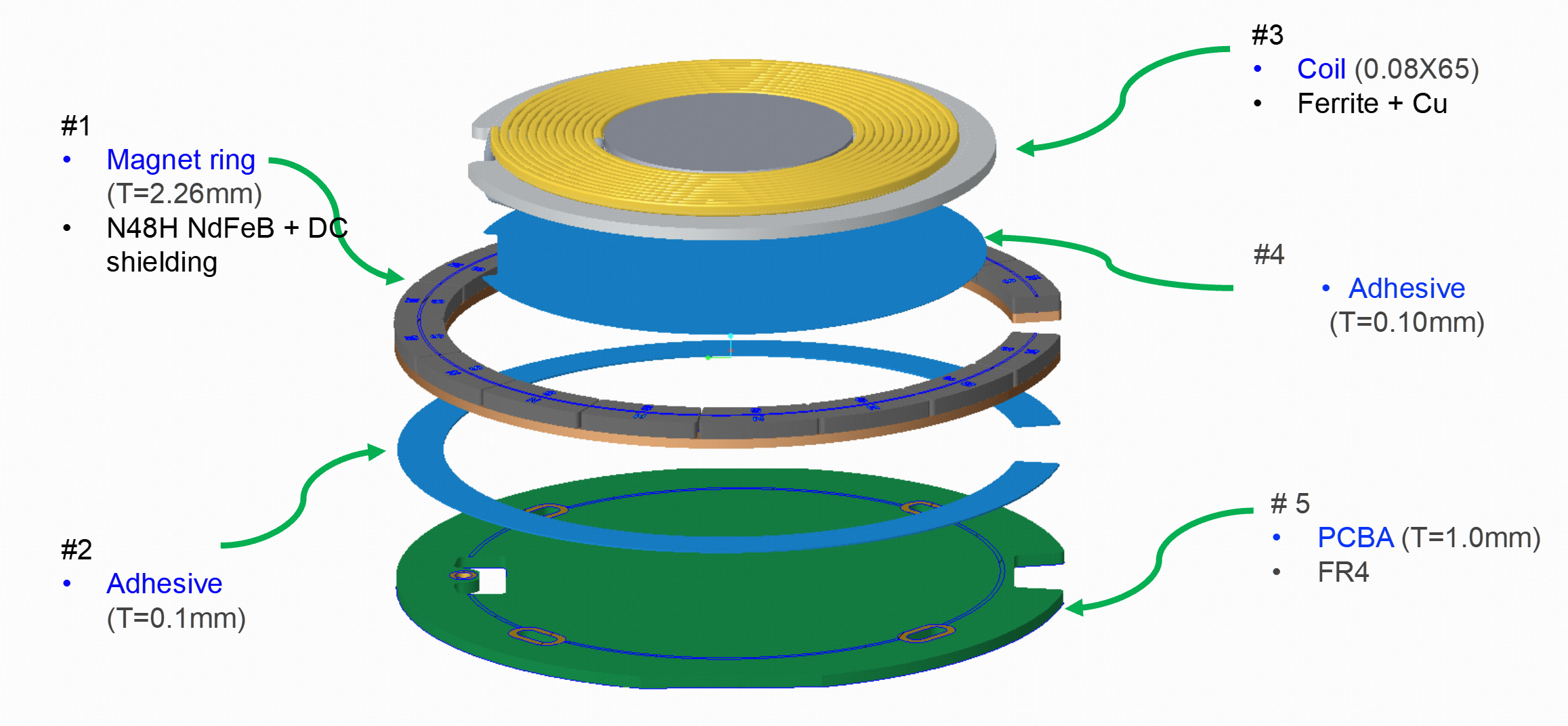
NU328 and NU329 pair a 2.26mm N48H magnet ring with a 1.0mm PCBA and an FR4 backplate, bringing total module thickness down to 5.4mm.
Customization vs. lead time
NuVolta supports application-specific customization of the top cap and magnet force, and protects lead times with a dual China + non-China supply chain and a streamlined production flow.
NuVolta standard module selection guide
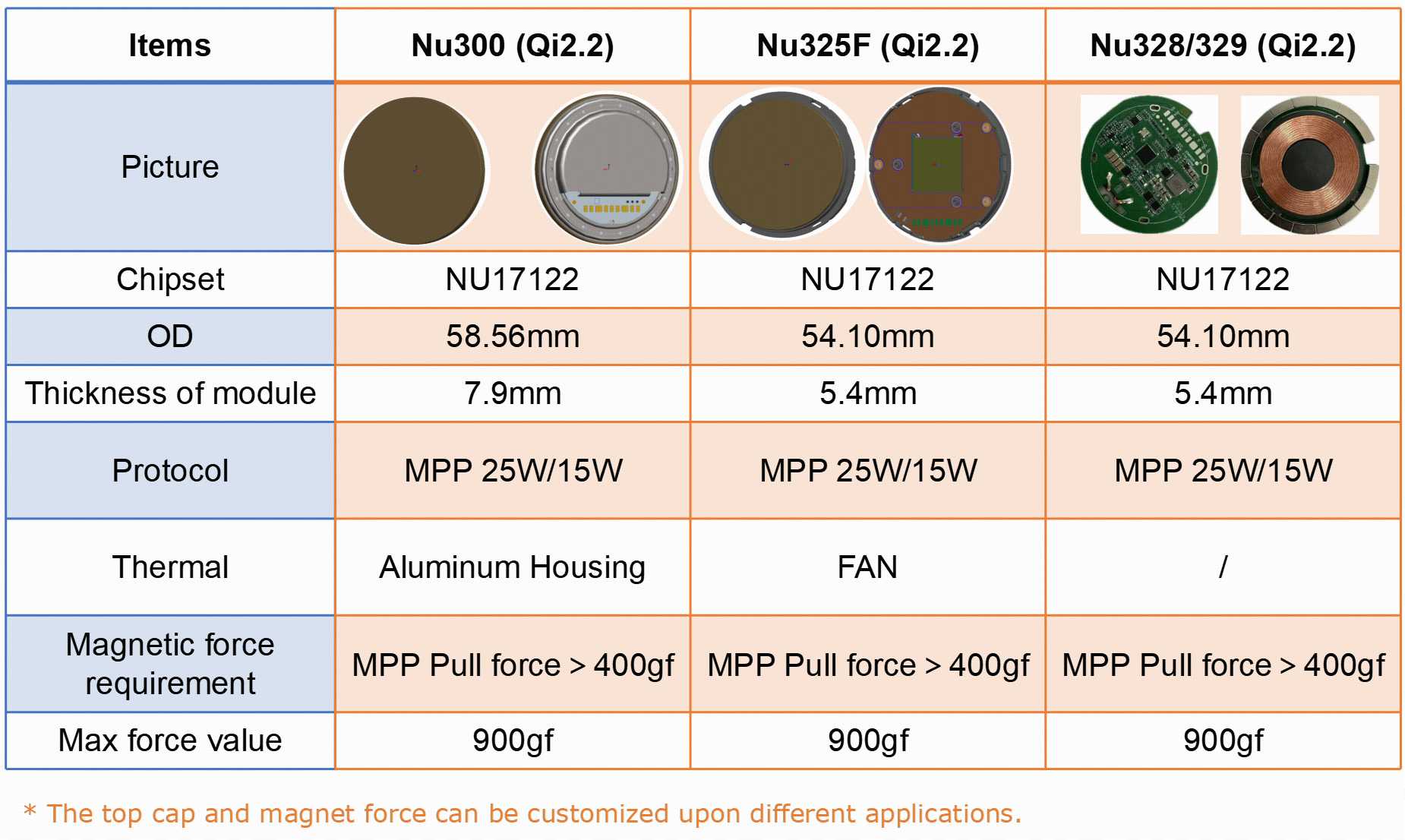
The NuVolta Qi2.2 product family
The note under the table — "the top cap and magnet force can be customized upon different applications" — means NuVolta leaves the customization rights with you. You do not have to accept a thick module to get 25W, and you do not have to give up 25W to get thin.
Selection guide
|
Your constraint
|
Recommended module
|
Why
|
|
Space is not tight, 25W is required, fan noise is not acceptable
|
NU300
|
Passive cooling in an aluminum housing, 7.9mm, MPP 25W/15W
|
|
Space is not tight, 25W is required, stronger cooling is needed
|
NU325F
|
Active cooling with a fan, 5.4mm, MPP 25W/15W
|
|
Space is at a premium, 25W is required and volume matters
|
NU325
|
TEC + fan, faster charging with active cooling
|
|
The device must stay thin, 15W is acceptable
|
NU328 / NU329
|
5.4mm in-house ultra-thin design, 20% thinner
|
|
An in-house ultra-thin look and feel is required
|
NU227 (Qi2.0) / NU328 (Qi2.2)
|
Both are in-house ultra-thin designs, 20% thinner
|
A note on model naming. The 5.4mm active-cooling platform is listed as NU325F in the module matrix and registered as Nu325F with the WPC (Qi-ID 24433), while the product site presents the TEC-cooled module under the name NU325. The two names refer to the same 54.10mm / 5.4mm platform, so check the part number on your datasheet or WPC certificate before ordering.
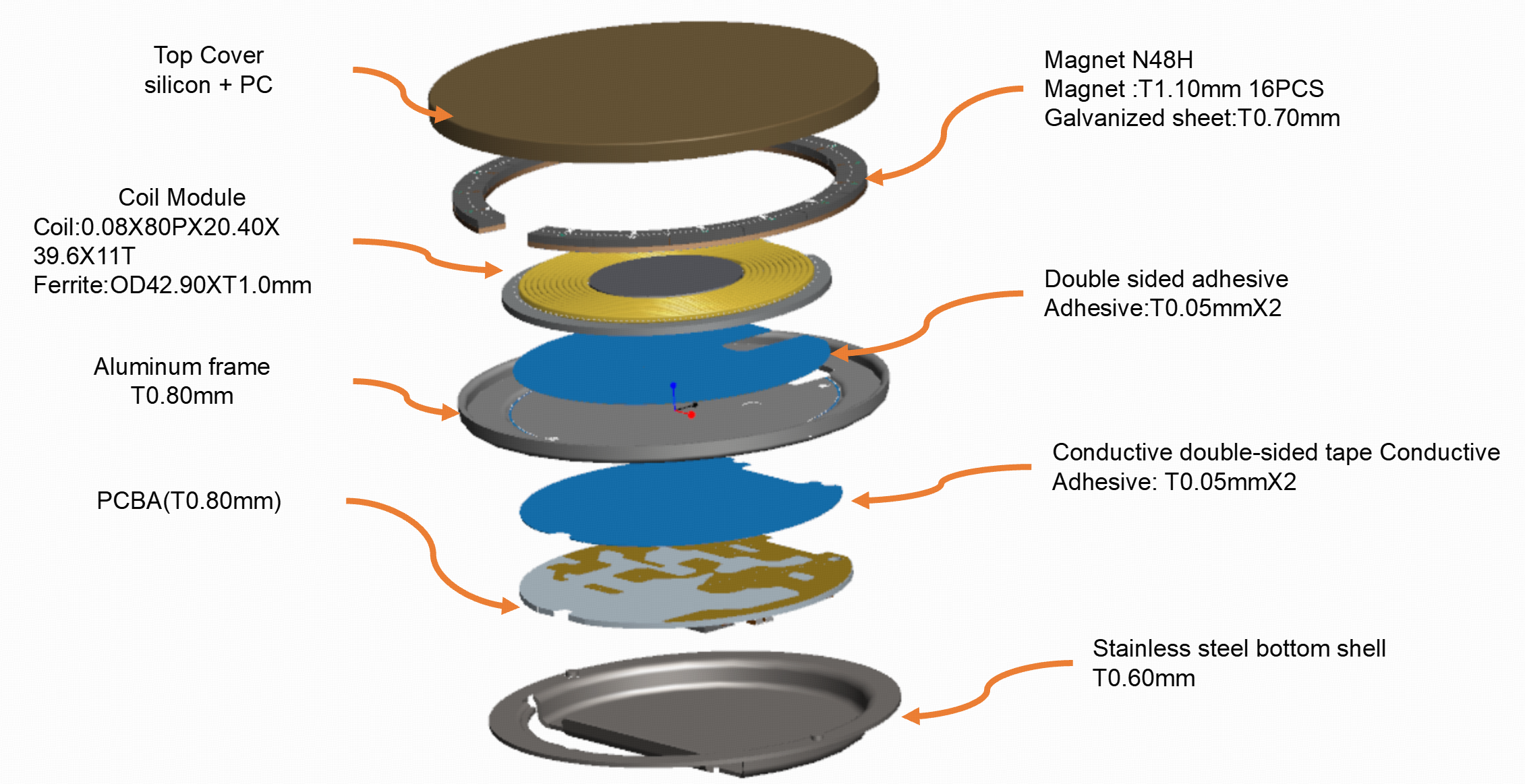
NuVolta module teardowns
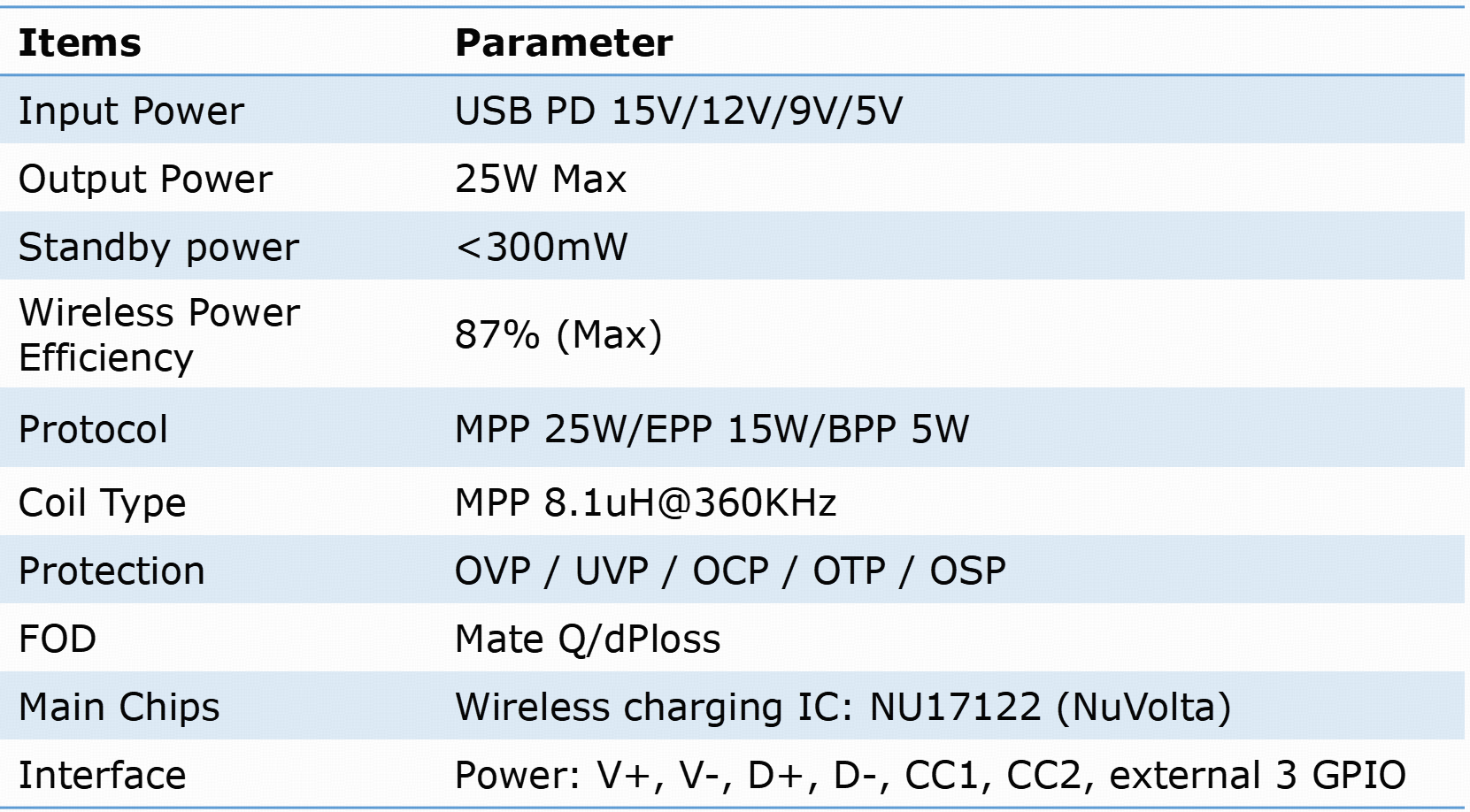
Specifications of the NuVolta Qi2.2 modules
Three entries in this table are worth calling out on their own:
First, the protocols are backward compatible. The module supports MPP 25W, EPP 15W and BPP 5W at the same time.
Second, three GPIOs are left on the interface. For a system integrator, those three GPIOs are reserved for external control logic — an external MCU that triggers or reads module status, system-level alignment checks, or indicator-light coordination, for example.
Third, 87% efficiency is a "Max" value, not a "typical" value. Working backwards from 87%, the highest 25W wireless output corresponds to roughly 28.7W of system input power, and the difference of about 3.7W ultimately becomes heat.
NU300
Passive cooling in an aluminum housing — the 7.9mm "standard answer".
The aluminum housing is both the structural part and the heat sink, so it adds none of the noise, power consumption and volume cost that a fan would bring.
NU328 | NU329
A 5.4mm in-house ultra-thin design, 20% thinner.
No fan, and no aluminum housing either — every layer is simply sized to exactly what it needs to be.
NU325
TEC + fan turn faster charging with active cooling into a structural fact.
This module combination supports faster charging with active cooling. It trades active cooling for space, rather than trading power for space.
Documentation and samples
1. Get the official documentation
NuVolta MPP module documentation: https://www.nuvoltatech.com/product/jdm/module/
2. Get a model recommendation and arrange samples
Email sales@nuvoltatech.com with your application scenario, input/output requirements and mechanical constraints.
A NuVolta engineer will come back with a recommended model, a quotation and a sample schedule.
Conclusion
When a product decides to go wireless and defines the next generation of consumer electronics, NuVolta's MPP standard modules mean you do not have to build a wireless charging transmitter from scratch. You define the wireless charging on a hardware platform that has already been Qi2 / Qi2.2 certified and validated in mass production.